Taylor Haus Galleries
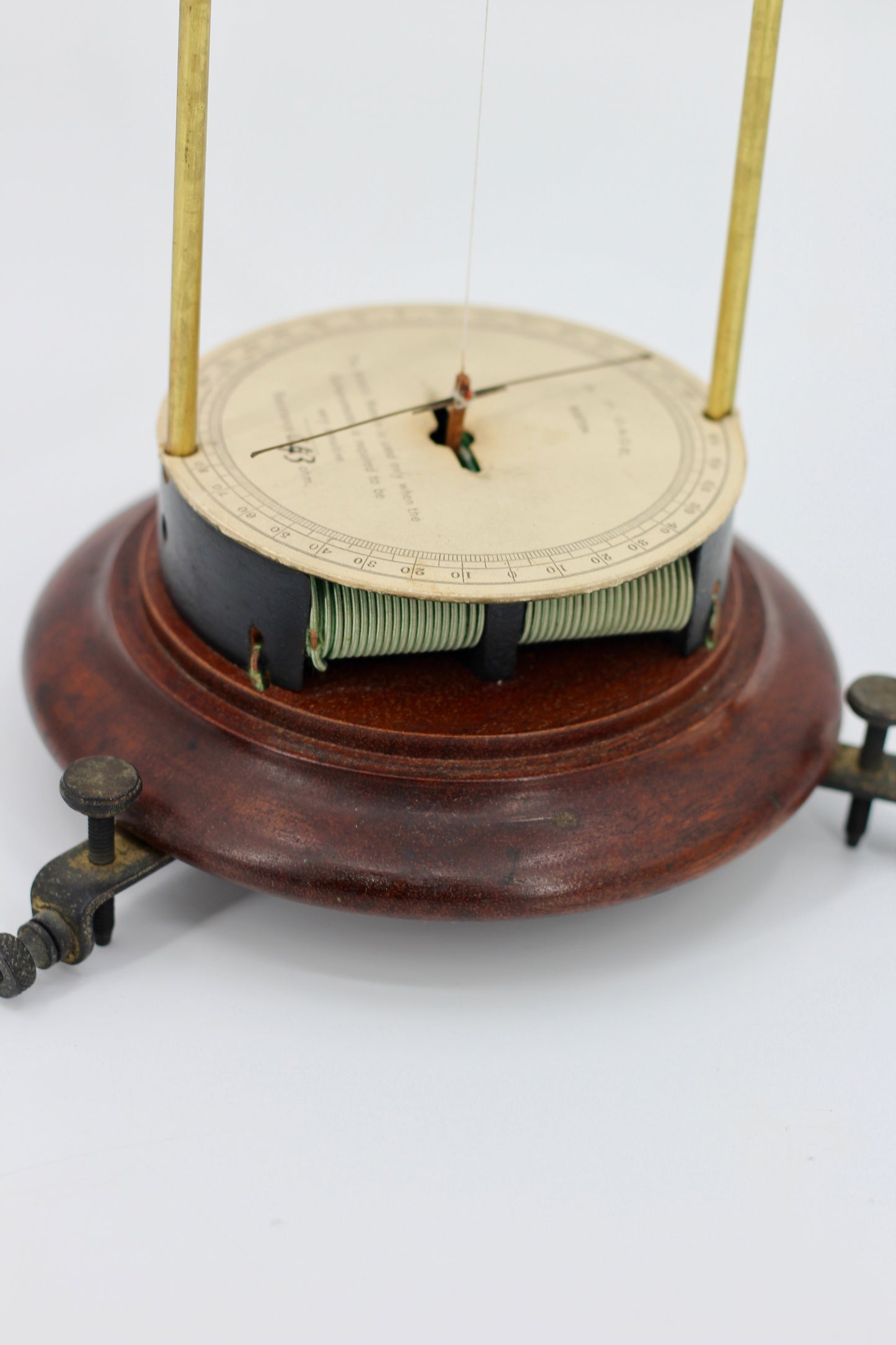
Astatic Galvanometer by A.P. Gage Boston, c.1880-1900
Astatic Galvanometer by A.P. Gage Boston, c.1880-1900
Astatic Galvanometer signed 'A.P. Gage, Boston'. Original paper face is numbered 0-90-0-90, and reads: 'The Astatic Needle is used only when the Galvanometer is required to be very sensitive. Resistance 0.43 ohm.' American made, circa 1880-1900.
Galvanometer sits atop a Mahogany base, on three adjustable brass legs. With fitted, hand-blown antique glass cloche.
Featured at the Hampden-Sydney College.
Astatic Galvanometers are precision instruments used to detect small electric currents by generating a magnetic field. Thereby changing the direction of a suspended compass needle. From measuring the deflection of the compass needle from true North, the electric current can be detected, as well as it's relative strength (if needle moves completely around, the charge is greater- if the needle barely moves, the charge is smaller).
As telescopes first showed us the macro world, astatic galvanometers first showed us the micro world. This instrument was a first for sensitive and quantitative electrical data, paving way for the incredible advancements in electron studies and technological innovations ever since.
Diameter: 5.5"
Height (with cloche): 9"
Weight: 2 lbs. 4 oz.
For Pricing & Inquiries, Please Email: info@taylorhausgalleries.com